Ship Stability & GM Calculation: Guide for Officers
Master the principles of vessel stability and learn how to accurately calculate the Metacentric Height (GM). This guide covers KG, KM, and stability criteria for safer ship operations.
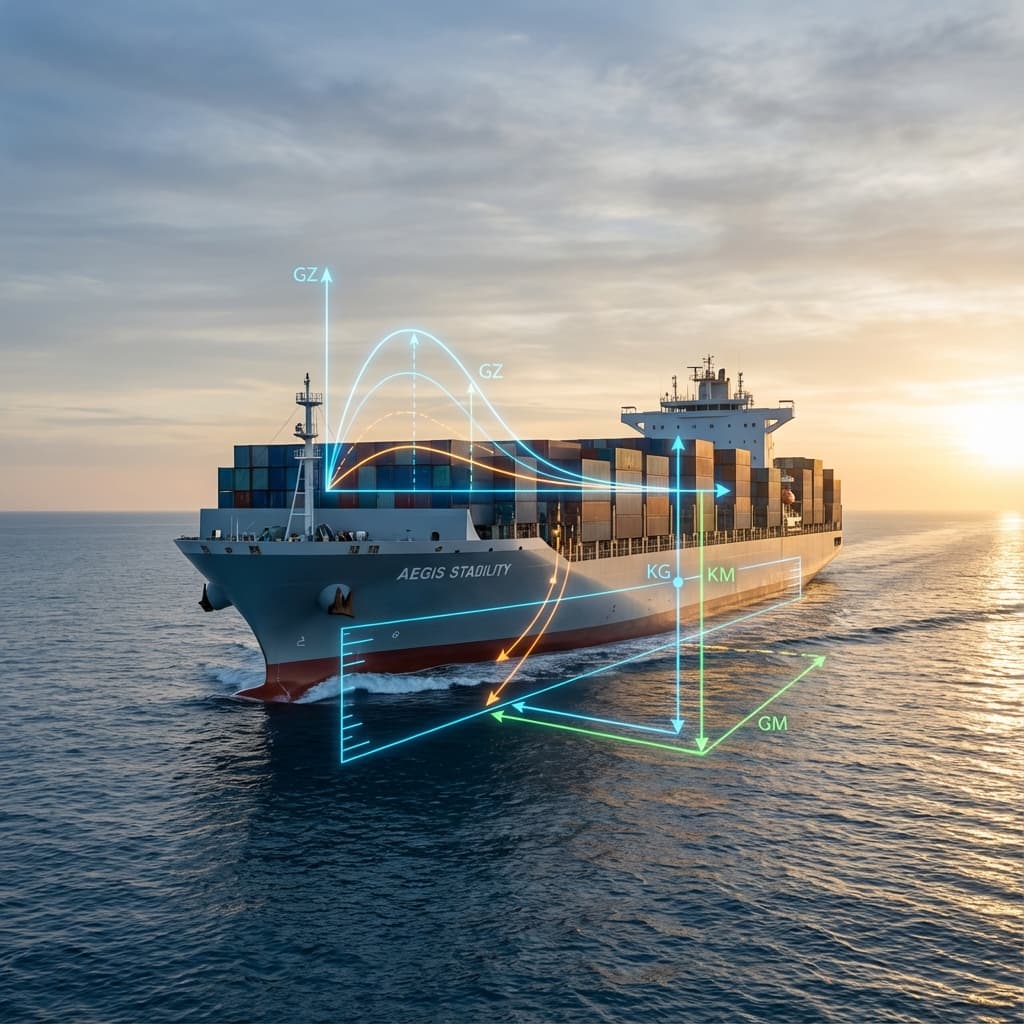
In this guide, we'll walk through the principles of ship stability and the step-by-step process of calculating GM, which is vital for safe vessel operations.
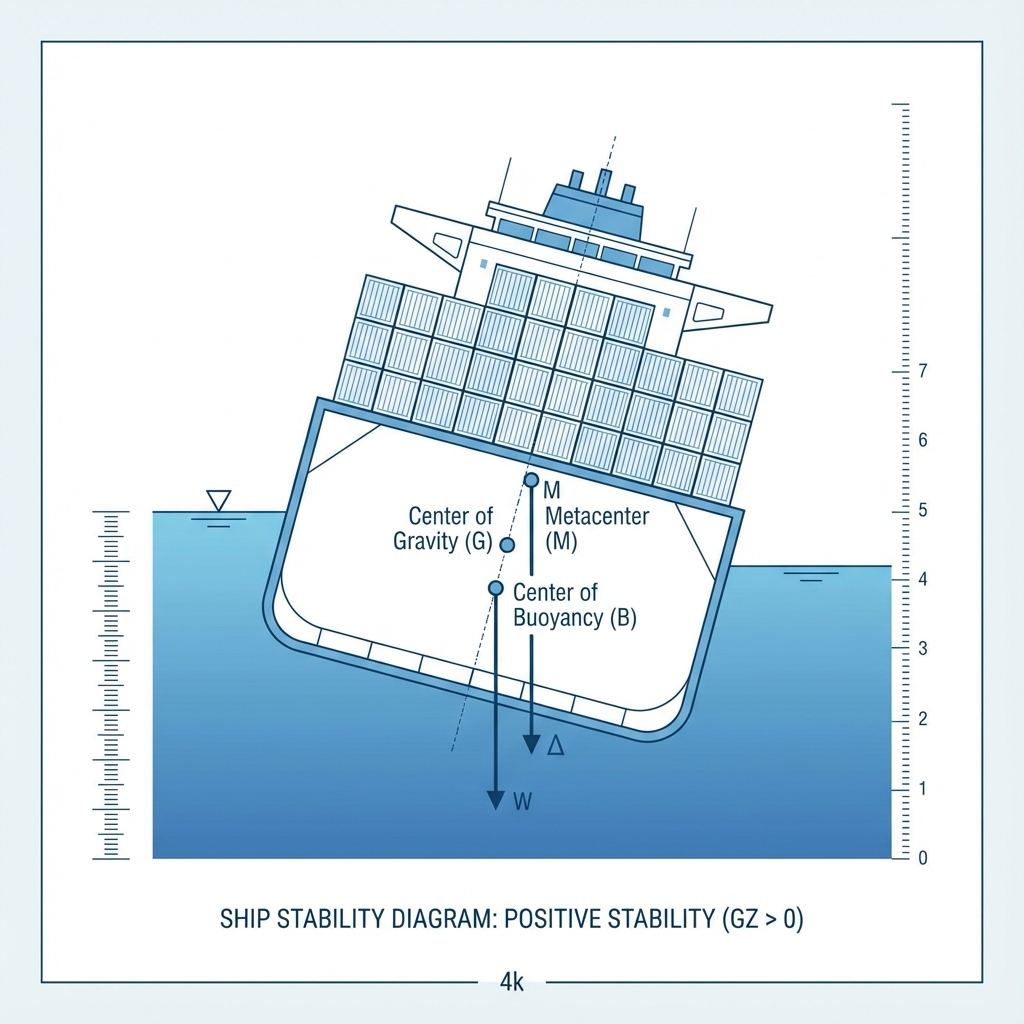
Core Principles of Vessel Stability
To understand stability, we must first define three primary points of a ship's vertical cross-section:
- Center of Gravity (G): The point through which the total weight of the ship and its contents acts vertically downwards.
- Center of Buoyancy (B): The geometric center of the underwater volume of the ship, where the upward force of buoyancy acts.
- Metacenter (M): The intersection point of two successive lines of action of buoyancy as the ship heels through a small angle.
What is Metacentric Height (GM)?
The GM (Metacentric Height) is the vertical distance between the Center of Gravity (G) and the Metacenter (M). It is the primary measure of a vessel's initial stability.
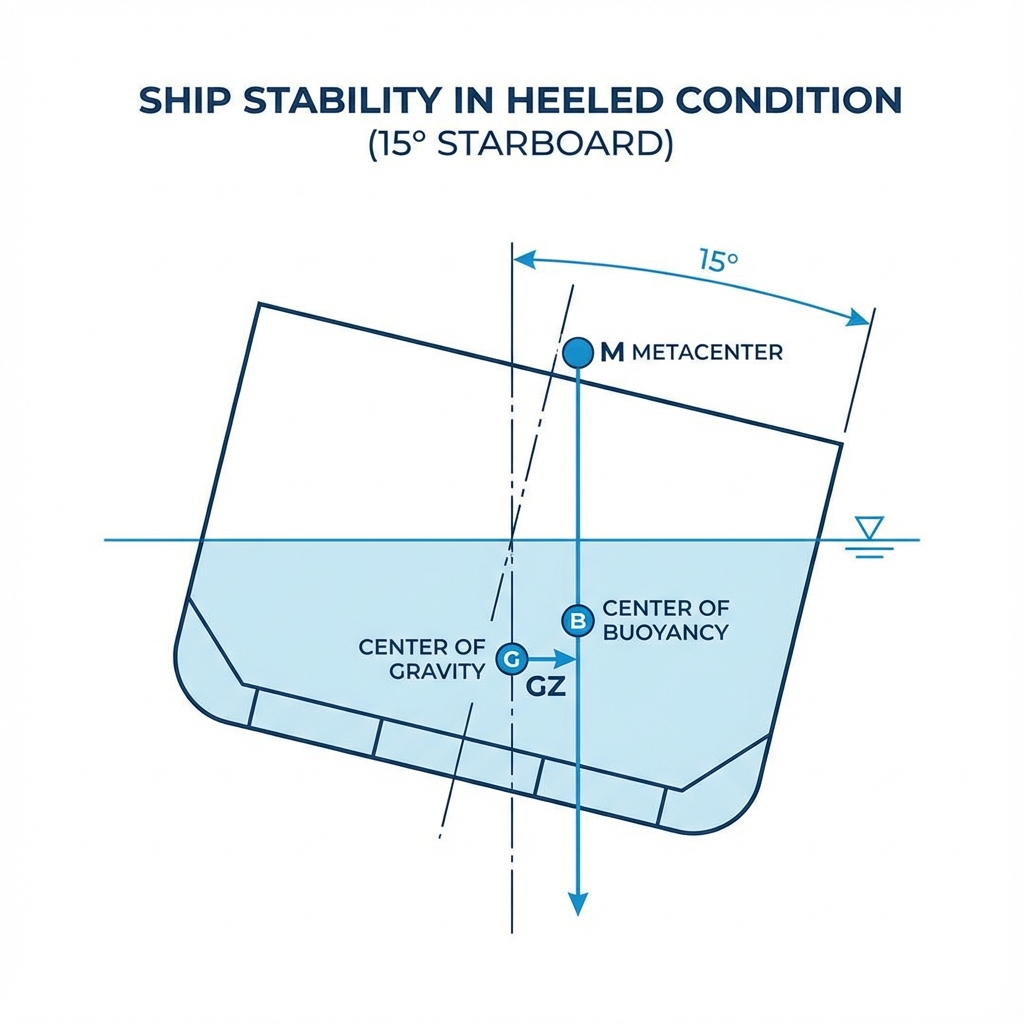
- Positive GM: The metacenter (M) is above the center of gravity (G). The ship is stable and will return to upright.
- Neutral GM: G and M coincide. The ship has no tendency to return to upright or heel further (unstable in practical terms).
- Negative GM: The center of gravity (G) is above the metacenter (M). The ship is unstable and may capsize.
The GM Calculation Formula
The most common way to find the final fluid GM is:
GM = KM - KG
Where:
- KM: The height of the Metacenter above the Keel (found in the ship's hydrostatic tables).
- KG: The height of the Center of Gravity above the Keel (calculated from the weights on board).
Calculating the Vertical Center of Gravity (KG)
To find the final KG, you must take the sum of vertical moments of all weights (ship's lightship + cargo + fuel + ballast + stores) and divide by the total displacement.
Final KG = Total Vertical Moments / Total Displacement
Free Surface Effect (FSE)
When tanks are only partially full, the liquid "sloshes" as the ship heels, causing a virtual rise in the center of gravity. This reduces the effective GM. The corrected GM is known as Fluid GM.
Fluid GM = Solid GM - Free Surface Correction (FSC)
Practical Tips for Stability Management
- Keep G Low: Stowing heavier cargo in lower holds lowers the center of gravity and increases GM.
- Minimize Free Surface: Avoid having too many "slack" tanks (partially full). Keep tanks either pressed full or empty when possible.
- Regular Checks: Always calculate stability before departure and update calculations as fuel and water are consumed during the voyage.
- Know Your Limits: Refer to the Intact Stability Criteria in your ship's Stability Booklet to ensure your GM satisfies IMO regulations.
Conclusion
Understanding GM and ship stability is not just about passing exams; it is about ensuring that your vessel survives the unpredictable conditions of the open sea. By maintaining a healthy GM and properly managing weights, you ensure a safe passage.
You can use our GM & Stability Calculator (title="Access our Online Vessel Stability and GM Calculator") to quickly estimate your ship's stability status during loading operations.
For more technical guides, visit our Maritime Blog Hub (title="View all maritime technical guides and articles").